



Updated: 2026-06-25

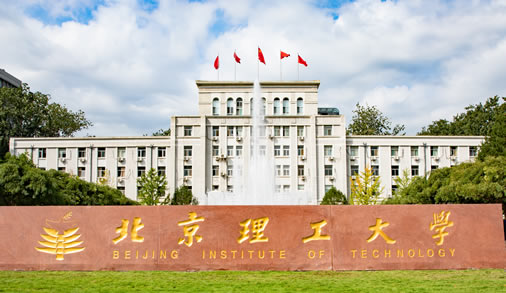
Wang Yingqi, a master's student from the School of Chemistry and Chemical Engineering at the Beijing Institute of Technology (BIT), recently published a research paper in the prestigious journal Chemical Engineering Journal.
The paper, titled Dual-acceptor synergy enables hierarchical morphology for efficient exciton and charge dynamics in as-cast organic solar cells, presents significant advancements in the field of organic photovoltaics.
Solution-processed organic solar cells (OSCs) offer unique advantages such as vibrant colors, semi-transparency, and mechanical flexibility, making them promising for applications in building-integrated photovoltaics and flexible wearable electronics.
In recent years, the power conversion efficiency (PCE) of single-junction OSCs has surpassed 20 percent, reaching the threshold for industrial application. However, achieving high efficiency typically requires complex processing techniques like thermal annealing, solvent additives, and post-treatment, which increase production costs and reduce batch reproducibility and compatibility with large-scale production.
In this study, the research team successfully developed high-efficiency as-cast ternary OSCs by blending the polymer donor D18 with two structurally similar small molecule acceptors, Y6-BO and L8-BO, using non-halogenated solvents.
The work uncovers the intrinsic mechanism of dual-acceptor synergy in controlling film formation dynamics and morphology evolution. It addresses the conflicting requirements for exciton dissociation and charge transport in the active layer of as-cast OSCs, proposing feasible strategies for regulation.
This research provides new insights for the industrial application of efficient, environmentally friendly, and low-cost organic photovoltaics.

-
Zhongguancun Campus:
No 5 Zhongguancun South Street, Haidian District, Beijing
-
Liangxiang Campus:
No 8 and 9 Yards, Liangxiang East Road, Fangshan District, Beijing
-
Xishan Campus:
No 16 Lengquan East Road, Haidian District, Beijing