



Updated: 2025-12-19
The 2025 International Space Science and Scientific Payload Competition (ISSSP 2025) was held in the Hong Kong Special Administrative Region on Nov 27 to 29. Students from the Beijing Institute of Technology (BIT) received multiple awards for their outstanding performances at the competition.
The competition was jointly organized by BIT, the Chinese Society of Astronautics, the International Academy of Astronautics, the Asia-Pacific Space Cooperation Organization, the International Astronautical Federation, and the Association for the Promotion of Science and Technology of Macau.
Participants engaged in intense competition across two main tracks: Creative Design of a Space Experiment and Innovative Design of a Space Payload Experiment. After a rigorous selection process in the preliminary rounds, 30 outstanding teams from both middle schools and universities advanced to the finals.
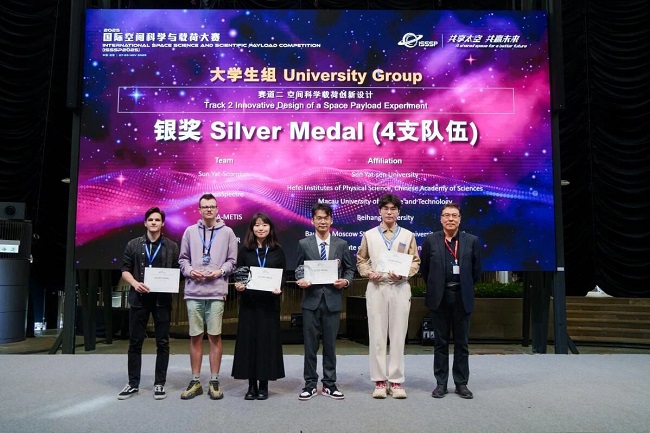
BIT student teams achieved impressive results, winning one silver medal (Team Space Fermentation), two bronze medals (Team Zero G-Proteo Hunters and Team DSPlanning), and the Best PPT award (Team Zero G-Proteo Hunters). In addition, the team from BIT Experimental School won the gold medal in the middle school category.
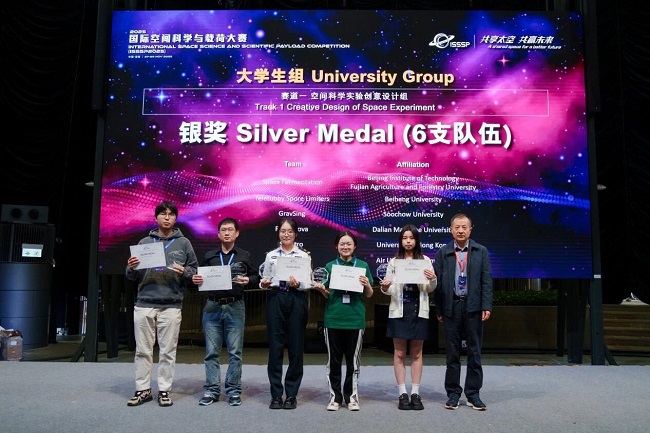
The competition committee will select promising space flight experiment projects from the winning teams for focused development, recommending them as potential candidates for missions involving the Chinese Space Station, commercial space ventures, and scientific satellites. Additionally, the winning teams will be prioritized in the aerospace talent development program, providing them with opportunities for face-to-face interactions with experts in China's aerospace sector, and comprehensive support of funding, technology, and platforms.
The ISSSP is the first of its kind in China, aimed at a global audience and dedicated to gathering and nurturing outstanding talent and projects in space science and payload technology. The competition is committed to promoting significant scientific discoveries and innovative technological breakthroughs in aerospace, advancing the commercialization of aerospace technology, and encouraging the sharing of innovative achievements to ensure that the benefits of space exploration serve all of humanity. This year, with the theme "A shared space for a better future", the competition attracted nearly 300 teams from over 100 universities in more than 10 countries and regions worldwide, setting a new record for the number of participating teams.

-
Zhongguancun Campus:
No 5 Zhongguancun South Street, Haidian District, Beijing
-
Liangxiang Campus:
No 8 and 9 Yards, Liangxiang East Road, Fangshan District, Beijing
-
Xishan Campus:
No 16 Lengquan East Road, Haidian District, Beijing